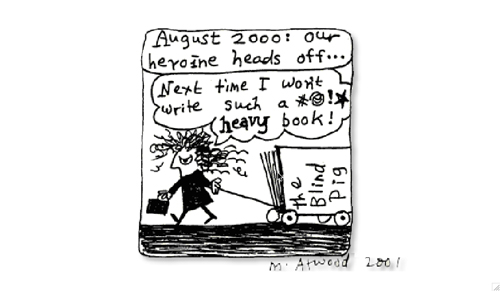
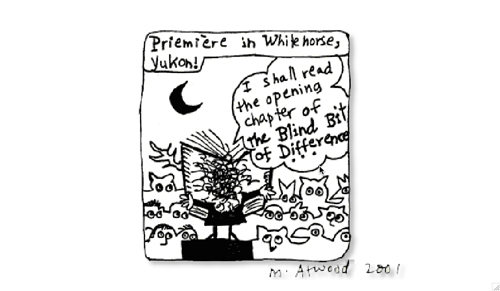
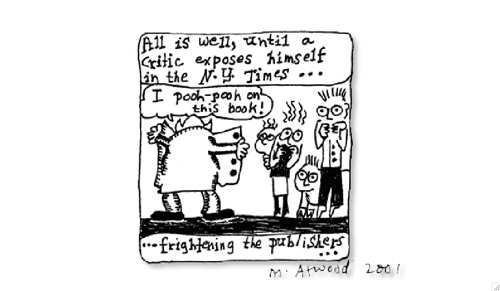
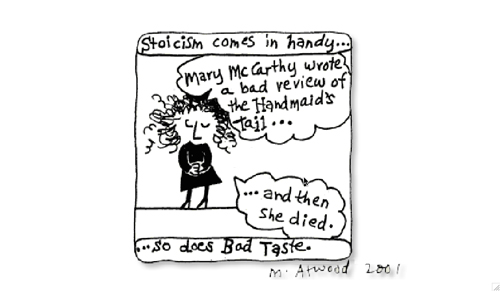
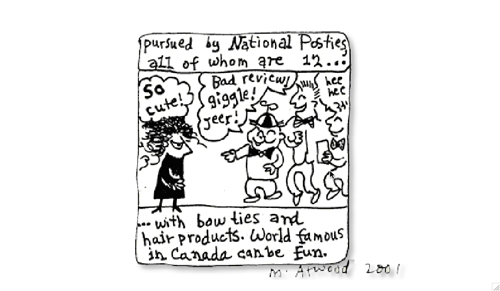
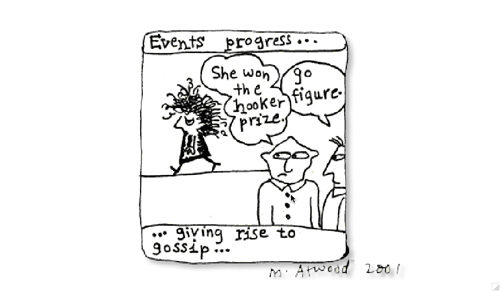
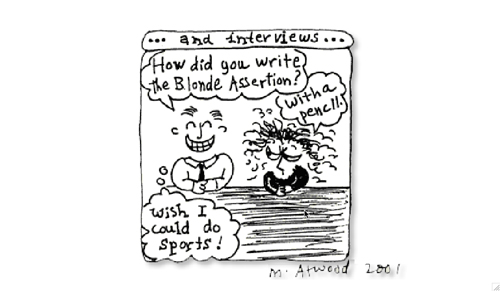
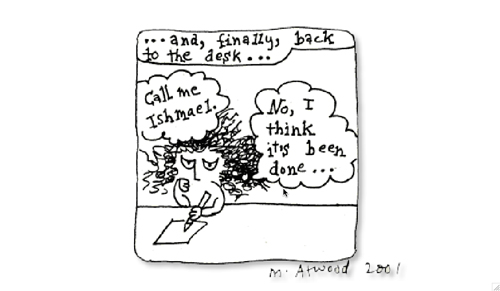
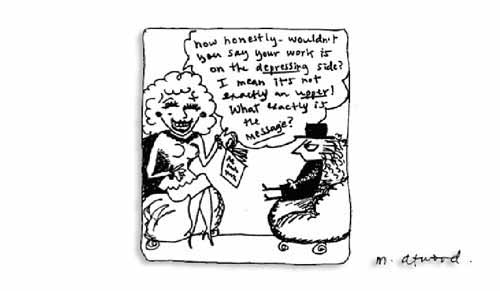
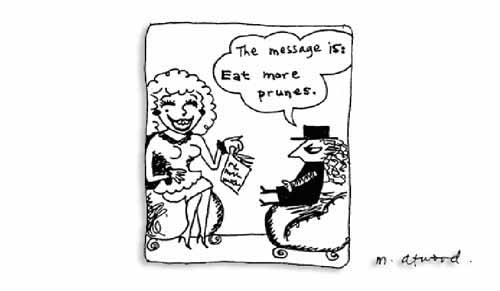
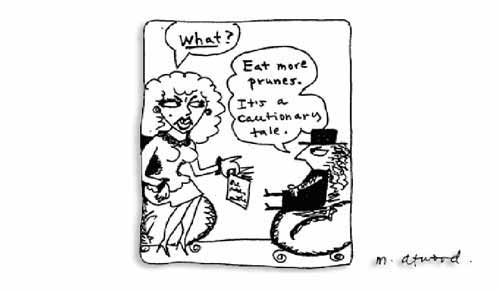
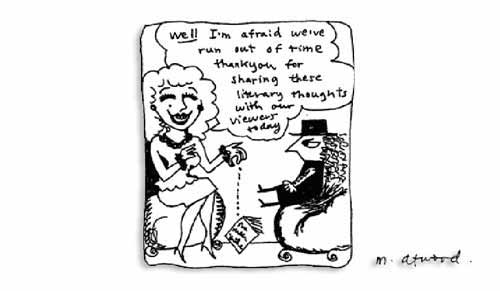
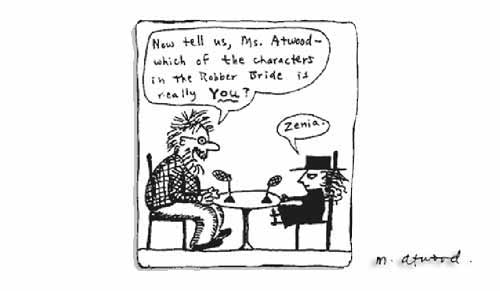
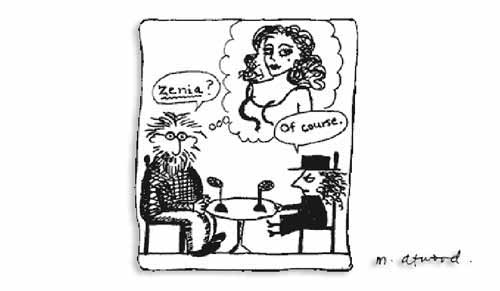
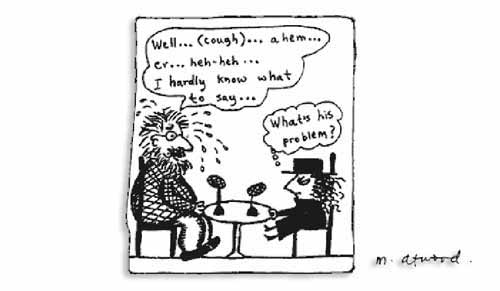
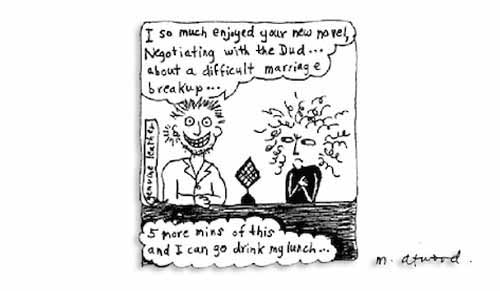
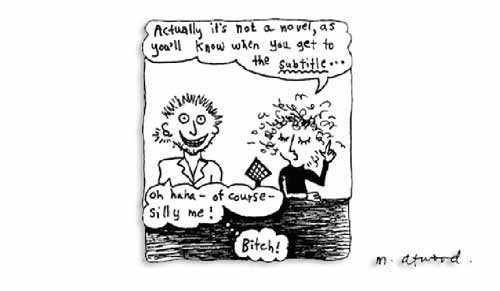
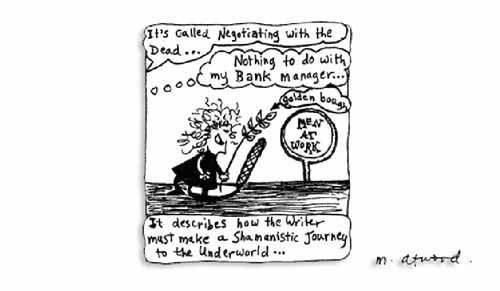
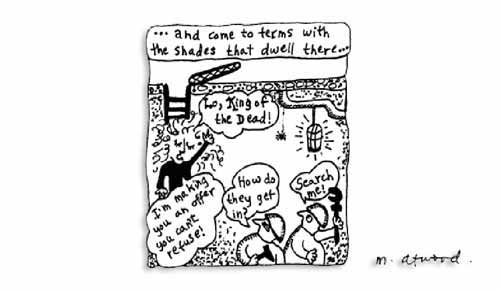
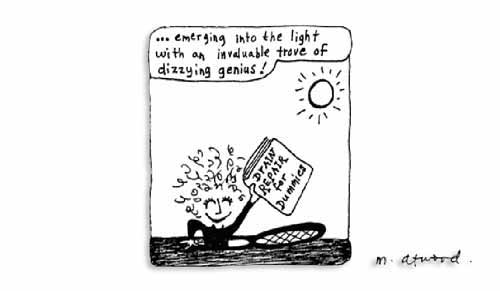
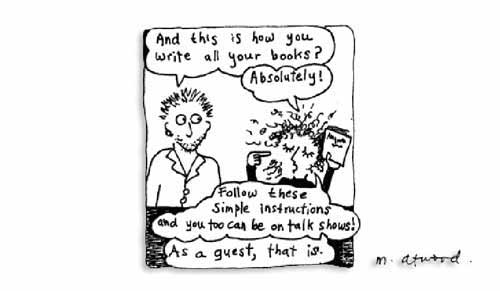
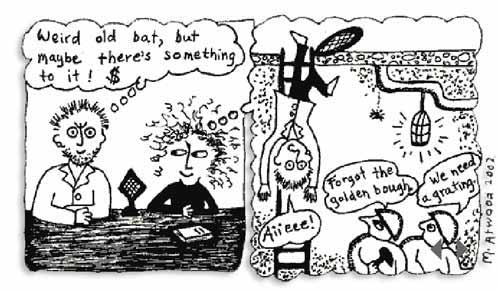
I’ve selected two passages to share with you from my book Negotiating with the Dead: A Writer on Writing. Enjoy…

From Ch. 1 “Orientation: Who do you think you are? What is “a writer” and how did I become one?”

There’s one characteristic that sets writing apart from most of the other arts – its apparent democracy, by which I mean its availability to almost everyone as a medium of expression. As a recurring newspaper advertisement puts it, “Why Not Be A Writer?…No previous experience or special education required.” Or as Elmore Leonard has one of his street crooks say,
1

…You asking me…do I know how to write down words on a piece of paper? That’s what you do, man, you put down one word after another as it comes in your head…You already learned in school how to write, didn’t you? I hope so. You have the idea and you put down what you want to say. Then you get somebody to add in the commas and shit where they belong…There people do that for you.1

To be an opera singer you not only have to have a voice, you have to train for years; to be a composer you have to have an ear, to be a dancer you have to have a fit body, to act on the stage you have to be able to remember your lines, and so on. Being a visual artist now approaches writing, as regards its apparent easiness – when you hear remarks like “My four-year-old could do better,” you know that envy and contempt are setting in, of the kind that stem from the belief that the artist in question is not really talented, only lucky or a slick operator, and probably a fraud as well. This is likely to happen when people can no longer see what gift or unusual ability sets an artist apart.

As for writing, most people secretly believe they themselves have a book in them, which they would write if they could only find the time. And there’s some truth to this notion. A lot of people do have a book in them – that is, they have had an experience that other people might want to read about. But this is not the same thing as “being a writer.”

Or, to put it in a more sinister way: everyone can dig a hole in a cemetery, but not everyone is a grave-digger. The latter takes a good deal more stamina and persistence. It is also, because of the nature of the activity, a deeply symbolic role. As a grave-digger, you are not just a person who excavates. You carry upon your shoulders the weight of other people’s projections, of their fears and fantasies and anxieties and superstitions. You represent mortality, whether you like it or not. And so it is with any public role, including that of the Writer, capital W; but also as with any public role, the significance of that role – its emotional and symbolic content varies over time. 


From Ch. 3 “Dedication: The Great God Pen. Apollo vs. Mammon: at whose altar should I worship?” 

Writers too must eat. You can have money of your own; you can marry money; you can attract a patron – whether a king, a duke, or an arts board; you can have a day job, or you can sell to the market. There are the choices, for a writer, in relation to money, and they are the only choices.

The money factor is often underplayed in biographies of writers, the biographers being as a rule much more fascinated by love affairs, neuroses, addictions, influences, diseases, and bad habits generally. Yet money is often definitive, not just in what a writer eats but in what he or she writes. Certain tales are emblematic – poor Walter Scott, for instance, who signed a promissory note for a partner, and upon the latter’s bankruptcy scribbled himself to death to pay off the debt. Such nightmares haunt our waking moments, let alone our sleeping ones. Chained to the desk. Forced to crank out the literary fretwork, regardless of inclination, regardless of whether it’s any good. Slave of the pen. What purgatory.

Even if we avoid signing promissory notes, there are many pitfalls. There is, for instance, the publishing system, and its growing domination by the bottom-line bean-counters. “We don’t sell books,” one publisher said, “we sell solutions to marketing problems.” We’ve all heard the story about the writer whose first novel hasn’t done well, and who then presents a second one. “If only this were a first novel,” sighs the agent. “Then I might be able to sell it.” Moral: a publisher will gamble, but – increasingly – only once. Gone are the days – when were those days anyway? – when a Maxwell Perkins-like publisher
2 might support a writer through two or three or four financial failures, waiting for the big breakthrough. Nowadays,

He who writes, and makes it pay,
Will live to write another day.
3

If you absolutely insist on eating, and can neither sell your next novel nor get a job as a waitperson, there are literary grants, should you be able to elbow aside the thousands of others in the queue. There are creative-writing teaching posts, but there’s a queue for those as well. For the newly or the effectively published, there are also international writers’ festivals; there are the dreaded twenty-city book tours; there are interviews in newspapers. There didn’t use to be any of those things.

Failing all of that, there is hackwork. There’s publishing yourself on the Internet. And, as a last resort, there are pseudonyms. That way you can make your novel look like a first novel, even if it isn’t one. It’s a jungle out there in alphabet-land. No, it’s more like a machine. It’s cog eat cog.

When I found I was a writer at the age of sixteen, money was the last thing on my mind, but it shortly became the first. As I turned seventeen and eighteen and nineteen and took stock of the situation, the anxiety increased. How was I going to live? I was brought up my Depression-hardened parents to be, as they say now, fiscally responsible, and was expected to support myself. I had no doubt that I could do so, one way or another; but I didn’t know what danger I was in as a young person attempting to live in the world as a writer, where so many forces might conspire to snuff out my light.

I didn’t encounter any writing about writers and their writing lives until I’d made it to university and had run headlong into Cyril Connolly’s Enemies of Promise, originally published in 1938 but reissued in time for me to be frightened by it.
4 It lists the very many bad things that can happen to a writer to keep him – him is assumed – from producing his best work. These include not only the practice of journalism – a bloodsucker for sure – but also popular success, getting too involved with political agendas, not having any money, and being a homosexual. About the most effective thing a writer could do to support himself, said Cyril Connolly – both he and I were living then in the age before the proliferation of grants – was to marry a rich woman. There wasn’t much hope of this for me, but all other avenues, according to Connolly, were fraught with peril.

I did not for an instant think I would be able to make any money from writing – or not from the kind of writing I saw myself as doing. But then, selling out to the marketplace wasn’t much of a threat to me at that time. For one thing, much of what I was writing was poetry. Enough said. As far as the rest of it went – by the rest of it I mean novels – as I’ve mentioned, everyone enters the scene at a certain point in time and also in a certain place, and this was Canada in the late 1950s. Everything has changed now, of course, and in my country a six-figure advance is within reach of the favoured young novelist; but such things were out of the question then. There were few local publishers, and those few made their living from acting as agents for imported work, and from selling school texts. They weren’t inclined to take risks, since there wasn’t much demand for indigenous writing. The colonial mentality was still in force, meaning that the Great Good Place for the arts was thought to be somewhere else, such as London, Paris, or New York, and if you were a Canadian writer you were assumed by your countryfolk to be not only inferior, but pitiable, pathetic, and pretentious. Wyndham Lewis, who sat out the war in Toronto, was asked by a local matron where he was living, and when he told her, she said, “Mr. Lewis, that is not a very fashionable address.” “Madam,” replied the writer, “Toronto is not a very fashionable address.” Nor was it at the time I began writing. If you wanted to be a serious writer, you had to do it for art’s sake, because there was faint hope of being able to do it for money.

By the time I was twenty I knew some people who wrote, but not one of them expected to make a living at it. To get even a crumb fallen from the literary movable feast, you’d have to publish outside the country, and that meant you would have to write something that might snare you a foreign publisher. It went without saying that these foreign publishers were not much interested in Canada. Voltaire’s dismissal of the place – “quelques arpents de neige” – was still the consensus. James Joyce’s well-known triple-barreled slogan, “silence, exile, and cunning,”
5 had a distinct resonance for aspiring Canadian writers, especially the exile part of it. 

Thus my generation was doomed, faute de mieux, to a devotion to art for its own sake, though we had by no means explored the history and iconography of that position. If we had, we might have thought that our remoteness from the temptations of Mammon was good for us: there were those who held that money, although necessary for life, was a necessary evil, at least for an artist. Starve in a garret, get some visions. However, to stay alive, one had to have at least a bit of loot – best if it was inherited, because then one didn’t have to grub around for it and demean oneself; but to write for money, or even to be thought to have done so, put you in the prostitute category.

So it remains in certain quarters to this day. I can still hear the sneer in the tone of the Parisian intellectual who asked me, “Is it true you write the bestsellers?” “Not on purpose,” I replied somewhat coyly. Also somewhat defensively, for I knew these equations as well as he did, and was thoroughly acquainted with both kinds of snobbery: that which ascribes value to a book because it makes lots of money, and that which ascribes value to a book because it doesn’t. For the young writer who has purist ambitions, who wants to be authentic, who wants to be an artist of some sort, it’s a Catch-22, especially when society in general shares the view expressed in the Eudora Welty story, “The Petrified Man” – “’If you’re so smart, why ain’t you rich?’”
6  Either poor and real, and rich and a sell-out with a price-tag on your soul. So goes the mythology.

In fact, as Lewis Hyde has so definitively pointed out in his book The Gift: Imagination and the Erotic Life of Property,
7 any equation that tries to connect literary value and money is juggling apples and oranges. Chekhov began his career by writing exclusively for money, and never for any other reason. Does that make him ignoble? Shakespeare wrote for the stage, much of the time, and naturally he cranked out stuff he thought would appeal to his audience. Once he got his start, Charles Dickens tossed his day job and lived by the pen. Jane Austen and Emily Brontė didn’t, though they wouldn’t have minded some extra cash. But you can’t say any one of these is a better or worse artist simply because of the money factor.

Nevertheless, as Hyde points out, the part of any poem or novel that makes it a work of art doesn’t derive its value from the realm of market exchange. It comes from the realm of gift, which has altogether different modes of operating. A gift is not weighed and measured, nor can it be bought. It can’t be expected or demanded; rather it is granted, or else not. In theological terms it’s a grace, proceeding from the fullness of being. One can pray for it, but one’s prayer will not therefore be answered. If this were not so, there would never be any writer’s block. The composition of a novel may be one part inspiration and nine parts perspiration, but that one part inspiration is essential if the work is to live as art. (The parts vary for poetry, but both are still involved.)

There are four ways of arranging literary worth and money: good books that make money; bad books that make money; good books that don’t make money; bad books that don’t make money. Those are the only four combinations. All are possible.

Again according to Hyde, the serious artist would be well advised to acquire an agent who can mediate between the realm of art and that of money; this saves the writer from any undignified and contaminating haggling on his own behalf. He may thus remain modestly apart, single in intent and pure in heart, while others with more mercenary talents bid him up and knock him down, behind closed doors.

Lacking such protection, he will have to maintain a very firm division in his own soul. It is a case of rendering unto Caesar what is his, and then paying your respects to the other one – or the other ones – who are in charge of non-Caesarly artistic affairs. One half keeps the accounts, the other worships at the shrine. 

Elmore Leonard, Get Shorty (New York: Delta, Dell, 1990), p.176.
Maxwell Perkins (1884-1947), as editor-in-chief of Scribners, was the archetypal nurturing editor who published works by Ernest Hemingway, F. Scott Fitzgerald, and Thomas Wolfe. The character of Foxhall Edwards in Wolfe’s You Can’t Go Home Again (1941) is thought to be based on him.
A paraphrase of the well-known couplet, “He who fights and runs away / Will live to fight another day.” 
Cyril Connolloy, Enemies of Promise (Harmondsworth, Middlesex: Penguin, 1961).
James Joyce, A Portrait of the Artist as a Young Man (New York: Penguin, 1993), p.241.
Eudora Welty, “The Petrified Man,” Selected Stories of Eudora Welty (New York: The Modern Library, 1943), p.55.
Lewis Hyde, The Gift: Imagination and the Erotic Life of Property (New York: Vintage, Random House, 1979, 1983).


Recently

Twitter Margaret Margaret's Blog The Year Of The Flood


A beautiful special edition series of my books was published by my UK Publisher, Bloomsbury Publishing, to celebrate my 70th birthday this past November. The titles included in the series are: Surfacing, The Handmaid's Tale, Cat's Eye, The Robber Bride, Alias Grace, The Blind Assassin,
and Oryx and Crake.

Aug. 13- Aug. 15: Winterset Literary Festival in Eastport, NFLD (Bonavista
Bay).

Aug. 29: Listen to The Bottom Line with David Suzuki on CBC Radio One from 11am to 1pm, in every time zone, to hear David's interview with Margaret on the relationship between life and death.

Aug. 29—Sept. 12: Adventure Canada trip to Arctic.

Sept. 20: The Year of the Flood paperback launch event - 92nd Street Y in New York.

Sept. 21: Portsmouth, New Hampshire- Writers on a New England Stage.

Sept. 23: Portland, Oregon- Portland Arts & Lectures- together in conversation with Ursula K. Le Guin.

Sept. 26-31: Keynote speaker for International PEN congress in Japan -“Literature and the Environment”.

Oct. 13: Toronto- Opening night for Ron Mann's In the Wake of the Flood at the Bell Lightbox for Planet in Focus 11th International Film & Video Festival.

Oct. 24-26: Atlanta, Georgia- Delivering the Ellman Lectures at Emory University.

Oct. 27-29: Nashville, Tennessee - Belmont University. Lecture/Reading followed by Q & A.

Nov. 17: Laurentian University for Sixth Annual Margaret Atwood Birthday Dinner.

Nov. 19: Edmonton, Alberta. Opening speaker for Parkland Institute's 2010 Annual Fall Conference at the University of Alberta.

Nov. 30: Toronto- Read for the Cure

March 7-14: Attending Emirates Airline Festival of Literature in Dubai, United Arab Emirates.